
5 Key Questions to Ask When Hiring a Connecticut Electrician
A breaker keeps tripping, an outlet has stopped working, or a renovation is ready for wiring, and now you need to decide who you trust with your home’s electrical system. Safe and Sound Electric helps homeowners throughout Stamford, Greenwich, and Lower Fairfield County get dependable electrical work done safely, and choosing the right Connecticut electrician starts with asking a few smart questions before the job begins.
The best electrician should be able to explain who is doing the work, what it will cost, how permits and code requirements will be handled, and what happens after the job is finished. These five questions can tell you a lot before anyone opens your electrical panel.
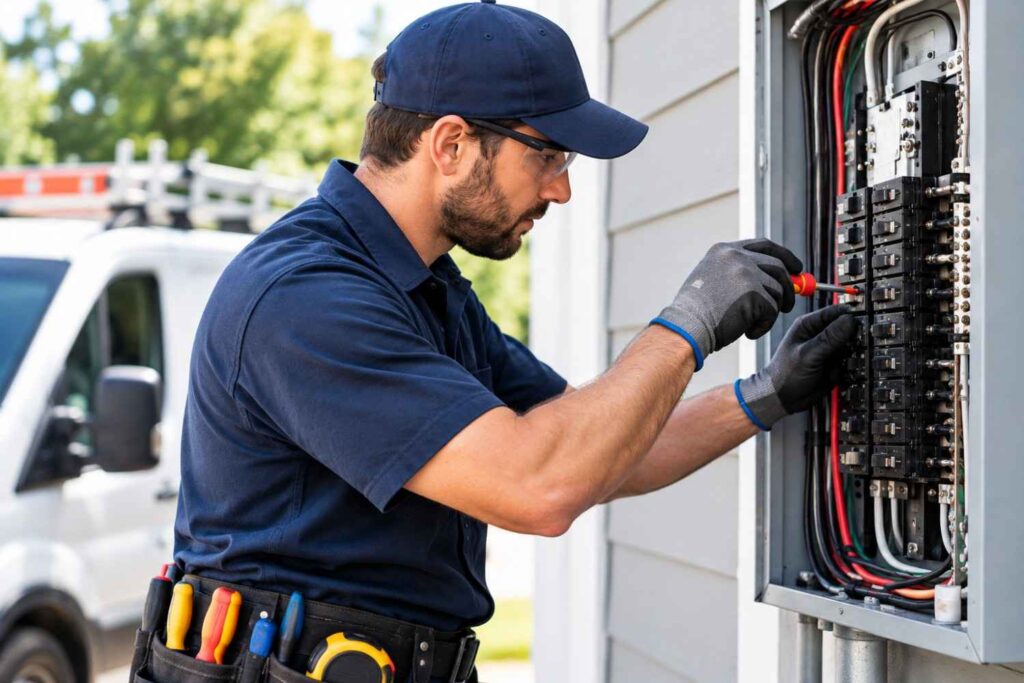
1. Are You Properly Licensed to Perform This Electrical Work in Connecticut?
Start here. Connecticut requires electricians to be licensed through the Department of Consumer Protection, but not every electrical license carries the same authority. In Connecticut, electrical contractors are the professionals authorized to obtain permits and sign contracts with customers. Journeyperson electricians can perform electrical work while employed by a properly licensed contractor, but they cannot independently contract directly with homeowners. You can verify credentials through Connecticut’s official eLicense system before hiring anyone.
Don’t be uncomfortable asking for licensing information. A reputable electrical contractor should be ready to explain who holds the appropriate license and who will be responsible for your project. Licensing matters whether you need a new outlet or a major service upgrade. It tells you the person responsible for the work has met Connecticut’s professional requirements and is accountable for completing the job properly.
2. Who Will Actually Be Working in My Home?
Hiring an electrical company is one thing. Knowing who will arrive at your door is another. Ask whether the company uses trained electricians, how employees are screened, and whether the team receives continuing training. This becomes especially important when someone will be working throughout your home, accessing basements, bedrooms, garages, utility areas, or other private spaces.
Professionalism should extend beyond the electrical work itself. Your electrician should arrive prepared, communicate clearly, protect the surrounding area, and clean up when the job is complete.
3. What Is Included in the Price Before Work Begins?
An electrical estimate should give you more than a number.
Ask what the quoted price covers, including labor, materials, equipment, permits when required, and any additional electrical work that may be needed. If conditions inside the walls or panel could change the scope, ask how those changes will be communicated and approved. Clear pricing is particularly important on projects such as panel upgrades, rewiring, remodels, and EV charger installations, where the condition and capacity of the existing electrical system can affect the work required.
A good electrician should be able to walk you through the recommendation in plain language. You should understand what is being repaired or installed, why the work is necessary, and what you are agreeing to before the job moves forward.
4. Will You Handle Permits, Code Requirements, and Inspections?
Not every electrical service requires a permit, but many larger installations and alterations do. Panel replacements, service upgrades, EV charger circuits, remodeling work, and new wiring are common examples where local permitting and inspection requirements may come into play.
Ask your electrician whether your particular project requires a permit, who will obtain it, and whether an inspection needs to be scheduled afterward. Connecticut specifically limits the ability to obtain electrical permits to properly licensed contractors, which makes this another reason to verify credentials before work begins.
A professional electrician should also be familiar with the requirements in the town where you live. Local processes can differ between Stamford, Greenwich, Darien, Norwalk, New Canaan, and other Connecticut municipalities, even though the electrical work itself must satisfy applicable electrical and safety codes. If the answer to a permitting question is simply, “Don’t worry about it,” ask for more detail. You should know whether a permit applies and how compliance will be handled before the work starts.
5. What Happens If There Is a Problem After the Work Is Finished?
The electrician leaving your driveway should not be the end of the relationship.
Ask what warranty applies to the work and what happens if something the electrician installed or repaired does not perform as expected. Find out how long workmanship is covered, how callbacks are handled, and whether the company stands behind the finished job.
That kind of follow-through matters because electrical work is built to serve your home for years. Whether you are replacing a breaker, installing lighting, upgrading your service, or completing a larger electrical installation, you want a company that remains accountable after the tools are packed up.
Common Questions About Hiring an Electrician in Connecticut
Here are a few questions Connecticut homeowners often have while comparing electricians.
How can I check an electrician’s license in Connecticut?
Use the Connecticut Department of Consumer Protection’s official eLicense system. You can search by an individual’s name or credential information and confirm whether the license is currently active or approved.
Should I ask whether an electrician is insured?
Yes. Insurance provides another important layer of protection when electrical work is being done on your property. Ensure your electrician is fully insured and licensed to perform electrical work.
Should I automatically choose the electrician with the lowest estimate?
Not necessarily. Compare the scope of work, licensing, materials, warranty, permitting, experience, and what is actually included in the price. A low number means little if important parts of the project have been left out.
Do I need a permit for every electrical repair in Connecticut?
No. Permit requirements depend on the type and extent of the work as well as local requirements. A qualified contractor should be able to tell you whether your particular project requires one and handle the process when necessary.
Can an electrician help with both small repairs and larger projects?
Yes. Safe and Sound Electric handles everything from troubleshooting, outlets, switches, and lighting to electrical panels, service upgrades, wiring, surge protection, and EV charger installations.
Choose a Connecticut Electrician You Can Feel Good About Hiring
When electrical work needs attention, the right questions can save you from uncertainty once the project is underway. Verify licensing, find out who will be working in your home, understand the price, get clear answers about permits, and know exactly how the company stands behind its work.
Safe and Sound Electric has served Connecticut homeowners since 2012 with licensed electricians, straightforward pricing, ongoing training, and a three-year service warranty. Our team provides residential electrical service throughout Stamford, Greenwich, Riverside, Darien, Norwalk, New Canaan, and surrounding Lower Fairfield County communities.
Call (203) 536-0021 today to speak with our team, or schedule electrical service online.